Graduate
General Information
Graduates work as specialists in computerized control systems, data processing and programming, data protection, development and use of microcontrollers for various purposes, as administrators of computer networks, project managers, engineers, field engineers, testers of complex electronic, computer and automated equipment, as well as engineers-researchers.
Module Handbooks Download PDF
Objectives of "Informatics and Control in Technical Systems" Program
The objectives typically focus on the integration of informatics (computing, data management, and software systems) with control engineering (systems and automation) to manage and optimize technical processes in industries like manufacturing, robotics, and energy systems. The program is designed to prepare students to design, manage, and optimize intelligent systems, using computational techniques and control strategies to improve performance, safety, and efficiency in technical environments.
Programme Learning Ourcomes
-
Apply advanced mathematics, computing, control theory, signal processing and information processing methods to formulate, model and analyze complex multi-domain technical systems and predict their behavior within stated uncertainty limits.
-
Select, implement and critically evaluate analytical, numerical, data-driven and experimental methods including machine learning, robust and optimal control, and advanced signal processing to analyze; interpret complex control and information systems, quantify uncertainty and assess the validity and limitations of results.
-
Design, document, and validate complex hardware–software to meet specified functional, safety, reliability, environmental, and economic requirements; integrate subsystems and demonstrate verification and validation
-
Plan and conduct independent investigations: perform systematic literature searches, design and run experiments/simulations, apply appropriate statistical analyses, consult standards/codes, and draw evidence based conclusions presented in scholarly form.
-
Apply professional engineering tools, development frameworks, software and laboratory/workshop methods to implement, test and validate technical solutions; demonstrate competence in embedded platforms, industrial networks, robotics, instrumentation and energy systems as appropriate emphasizing hands-on proficiency and safety practices.
-
Make justified and evidence-based engineering judgements when managing complexity, uncertainty and risk; evaluate alternatives by considering technical, economic, ethical, environmental, safety, and sustainability implications; plan, lead, and manage projects and accept responsibility for outcomes and team performance.
-
Communicate complex technical ideas clearly (written & oral) to specialist and non-specialist audiences, prepare and publish technical and academic documentation, contribute to innovation and lead or contribute effectively in interdisciplinary and multicultural teams.
-
Demonstrate ability for independent lifelong learning and professional development: maintain a personal development and structured professional development plan, critically evaluate emerging technologies and identify activities to sustain competence.
Laboratories
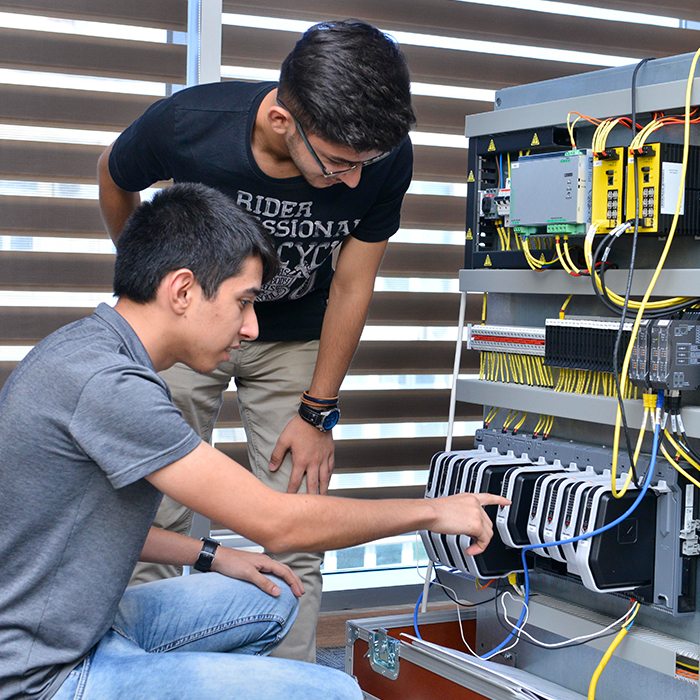
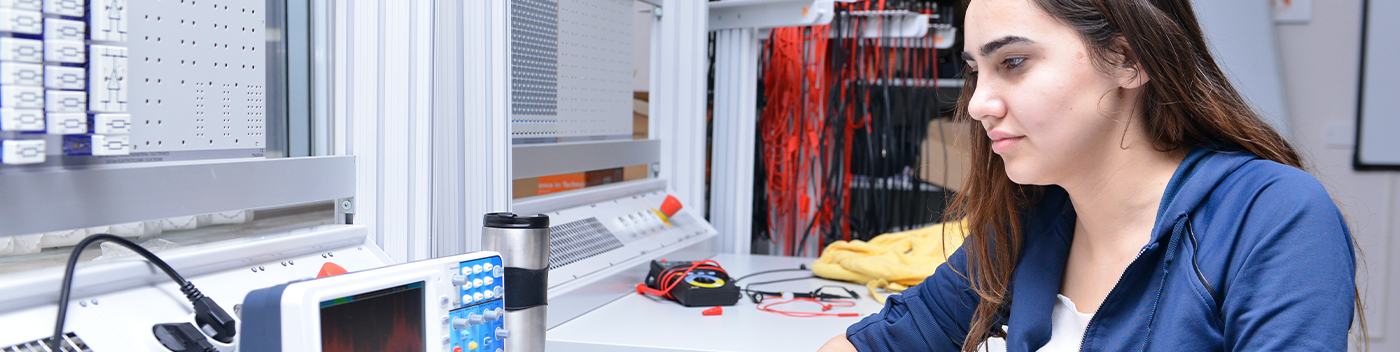
The department is equipped with modern appliances. Each student has an opportunity to work at a certain time in the labs (computerized control systems and automation, robotics, electronics and microprocessor technology) and in the department’s computer classes on personal computers, integrated into local area network, which allows him/her to study comprehensively the most modern advances in the technological industry, and work in the global computer network Internet.
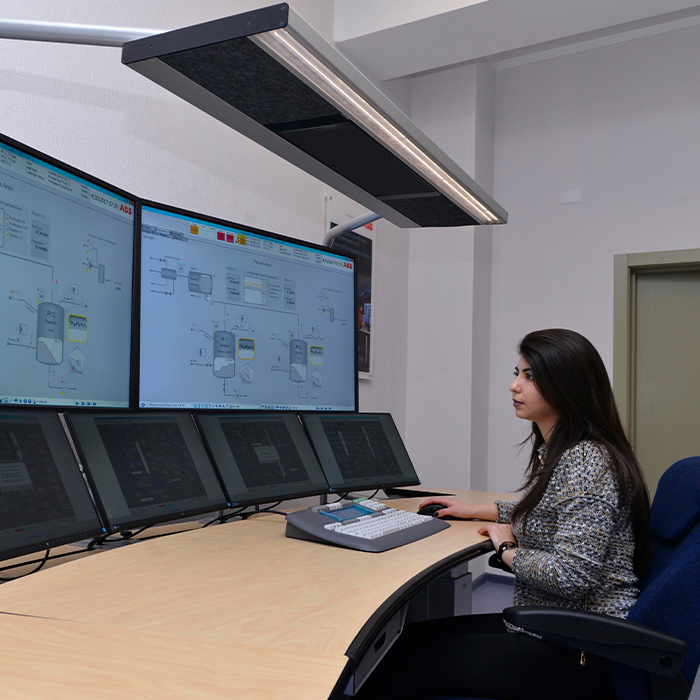
The "Process Control" laboratory is equipped with EMERSON company’s equipment, allowing master's students of the "Informatics and Control in Technical Systems" specialty to closely familiarize themselves with modern control and measuring instruments and optimal control systems while conducting their scientific research.
In the "Robotics Center," master's students carry out laboratory work in the subjects of "Robotics," "Mechatronic Systems," and "Internet of Things (IoT)," engaging in practical investigations and scientific research.
Internship opportunities
Our partners are SOCAR, BP, Emerson Process Management, ABB, Schneider Electric, Avandsis Group, ATENAU ltd., MHWirth, Rapid Solutions, Huawei, CISCO, Petkim, TalTech University, Ruse University, Istanbul Technical University.